Female Founders was created in response to a pattern that its founders, Lisa-Marie Fassl and Nina Wöss, observed repeatedly over the years. Contrary to a common assumption, the challenge was never a lack of capable women founders building ambitious companies.
Instead, it was the absence of the infrastructure required to scale: access to the right people, honest feedback, practical know-how, and environments where trust could be built without the need to constantly “perform”.
Ten years on, Female Founders has grown into Europe’s largest platform focused on advancing women-led startups from early traction to investment readiness.
Its approach is deliberately practical rather than purely inspirational, focusing on what drives real outcomes: fundraising readiness, operational foundations, leadership, and the often overlooked fundamentals that determine whether a company succeeds or fails.
Central to this approach is the creation of high-trust formats that bring together founders, investors, and ecosystem leaders in a way that leads to concrete next steps.
Among the organisation’s key milestones is the scaling of the Female Founders Bootcamp, which now brings together 50 women founders per cohort, and the development of the Female Founders Experience (FFX), a flagship format that is being rolled out across major European cities.
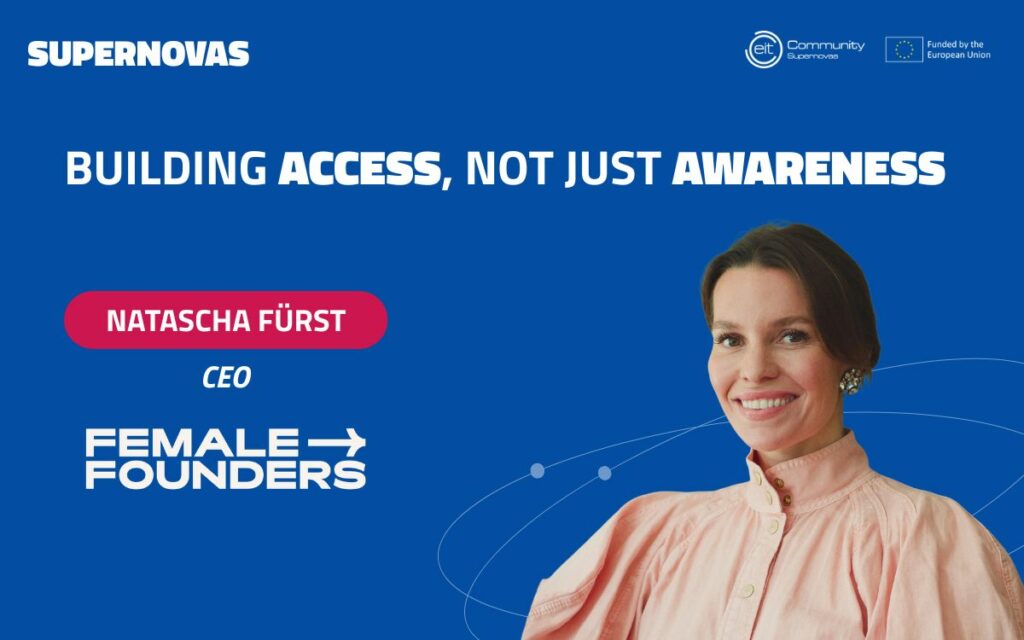
“There’s no shortage of talented women building great companies. There’s a shortage of infrastructure around them,” says Natascha Fürst, CEO of Female Founders.
FFX was designed in response to a clear gap in the ecosystem. While there is no shortage of events, there is often a lack of depth. Rather than functioning as a traditional conference, FFX is positioned as a curated experience where relationships are built with intention, decision-makers are present, and outcomes extend well beyond the event itself.
Alongside programme development, Female Founders has also taken steps to address structural challenges through capital. Recognising that ecosystem change requires financial backing, Nina Wöss and Lisa-Marie Fassl established Fund F, investing in (co-)women-founded teams across Europe.
A partnership focused on outcomes
The collaboration between EIT Community Supernovas and Female Founders reflects a shared ambition to move beyond fragmented efforts towards ecosystem-level change. According to Natascha Fürst, the partnership brings together two elements that are often missing when addressed separately: reach and outcomes.
EIT Community Supernovas contributes strong pan-European momentum and network access, while Female Founders brings tested formats that prepare founders for fundraising and create high-trust connections between founders and investors. The alignment lies in a common objective: increasing the number of investment-ready, fundable women-led startups and improving access to capital and opportunity across Europe, not in isolated pockets, but at scale.
This approach is rooted in what Female Founders describes as the need for “radical cooperation” across borders, ages, and professions. The partnership is seen as a practical expression of that principle, connecting networks with structured pathways designed to produce measurable outcomes for both founders and investors.
Structural barriers, not individual limitations
The challenges faced by women founders, as described by Fürst, are not primarily linked to capability, but to how the system operates. Access to relevant networks and the warm introductions that drive fundraising forward remains less automatic. In parallel, founders are often subject to a higher proof burden and tighter pattern-matching around what an “investable” profile looks like.
These dynamics have tangible consequences. Funding journeys tend to be slower, with smaller initial investments, more friction in follow-on rounds, and longer decision cycles. In a system that rewards speed and momentum, these factors make it significantly more difficult to scale.
Fürst emphasises that these outcomes are not accidental, but reflect the underlying structure of the ecosystem.
“Capital isn’t neutral. Outcomes reflect networks, incentives, and how decisions are made. If the same people see the same deals through the same patterns, you get the same results.”
Changing these outcomes requires widening access and making evaluation processes more deliberate and accountable.
Rethinking the system
Creating a more equitable ecosystem requires a shift in focus from participation to structure. Encouraging more women to build companies is only part of the solution. The systems that determine access to funding and influence decision-making must also be addressed.
These dynamics are explored in depth in our latest report on gender bias in venture capital, alongside a practical mitigation tool designed to help investors identify and reduce bias in their processes.
This includes increasing the presence of women in investment roles with real allocation power, such as partners, investment committee members, and scouts. It also requires more intentional sourcing strategies and clearer evaluation frameworks, reducing reliance on closed networks.
At the same time, there is a need to strengthen operational readiness earlier in the journey. Founders should enter fundraising with solid foundations in traction, hiring plans, governance, and legal structures, rather than being disadvantaged by gaps that could be addressed with the right preparation.
Measurement plays a critical role in this process. Rather than focusing solely on participation, progress should be tracked through outcomes: who gains access to meetings, who progresses to term sheets, who secures follow-on funding, and how long each stage takes.
Public funding is another important lever. Embedding a gender lens into funding mechanisms is not presented as optional, but as necessary. Despite representing 52% of Europe’s population, women do not currently have equal access to capital, including taxpayer-backed funding. Addressing this imbalance requires legal and structural commitment.
This is what Female Founders defines as structural change: improving access, reshaping decision-making patterns, and ensuring that these shifts are backed by real capital pathways.
Measuring real impact
Looking ahead, the focus is on measurable, practical outcomes. The impact of initiatives such as the EIT Community Supernovas partnership is expected to be visible in areas such as more relevant investor-founder matches with meaningful follow-up, higher conversion rates from introduction to due diligence, stronger cross-border access for women-led teams, and improved follow-on rates.
The goal is not simply to create opportunities, but to establish repeatable capital pathways that enable founders to build momentum over time.
Setting new standards in the ecosystem
Female Founders positions itself as both a builder of access and a standard-setter within the ecosystem. Its role is not limited to delivering programmes, but extends to redefining how connections are made and how opportunities are distributed.
This involves creating environments that reduce gatekeeping, prioritise trust, and focus on signal rather than performance. Inclusion, in this context, is not treated as a branding exercise, but as a measurable outcome reflected in who gains access to high-quality conversations, who secures funding, and who is able to build long-term opportunity.
What’s ahead
The organisation’s upcoming initiatives reflect a consistent focus on connecting readiness with access and ensuring that access leads to tangible outcomes. Across all programmes, the objective is to prepare founders for fundraising while placing them in environments where meaningful engagement with decision-makers can take place.
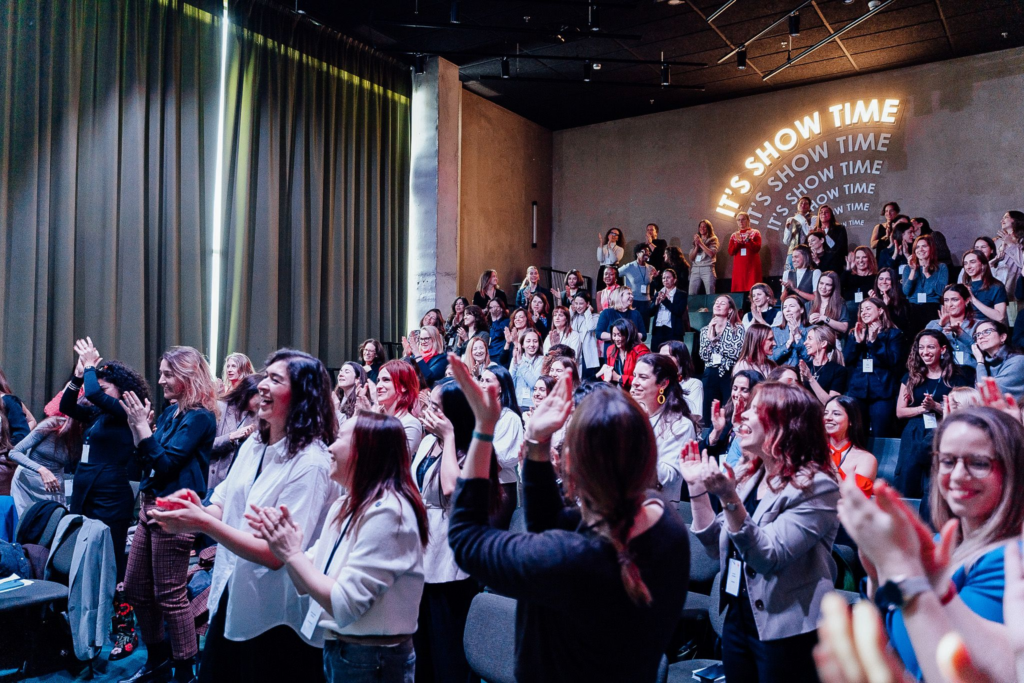
Upcoming initiatives in 2026 include:
- Female Founders Experience (FFX), Vienna – 19–20 May (during ViennaUP)
- Female Founders Bootcamp, Summer Edition (online) – 1–26 June
- FFB Summit (Berlin) – early July
- FFX Munich – 13–15 October
- Female Founders Bootcamp, Autumn Edition – 5–30 October
- FFB Summit – November
- FFX Zurich – 23 November
Across each of these, the common thread remains clear: building a structured path from readiness to access, and from access to measurable outcomes.
A system that needs redesign
Ultimately, the conversation points to a broader reality. Venture capital does not operate in a vacuum. The patterns it reinforces today shape the companies that will define the future.
Shifting those patterns requires more than intention. It requires design, coordination, and a commitment to building systems where access is not assumed, but actively created.
As part of this partnership, we are delighted to extend a limited number of invitations to our community for the Female Founders Experience (FFX) Vienna, taking place on 19–20 May during ViennaUP.
This includes exclusive access to a 10% ticket reduction, reserved for our network. Request your access here.
For those looking to take a more active step into venture capital, applications are currently open for Women2Invest, a programme designed for STEAM women entering the investment ecosystem.
Portrait of Natascha Fürst: © Martina Trepczyk